Carolin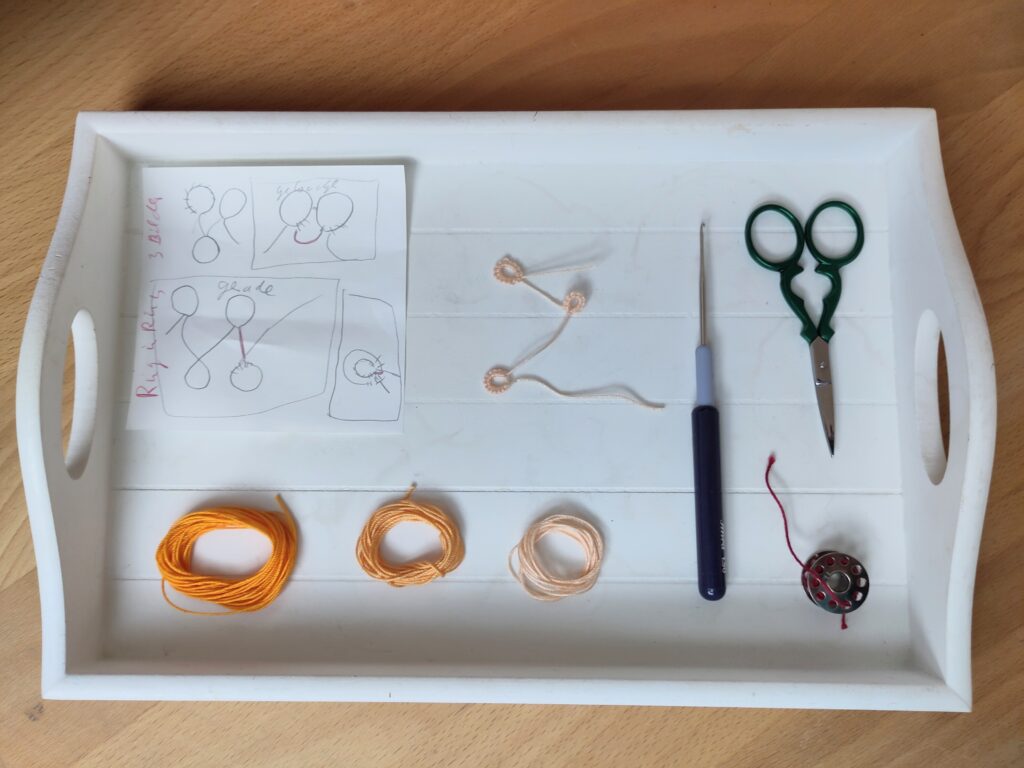
Some say that managing their in-progress craft projects is a hobby in its own right. By now, an entire market has even developed around it, with project bags featuring special compartments for needles and patterns, digital craft project planners, and even project management coaching.
Maybe you’ve already read an article or two on this topic (for example, my “WIP-away” article). But have you ever heard of a project tray?
The project tray is a rather simple idea, which can make a huge difference in your daily life.
What is a project tray?
A project tray is nothing more than a serving tray on which you place the tools and materials for your current craft project. This includes needles, scissors, possibly a pen and paper, the pattern, the yarn, and of course the project itself. For sewing projects, for example, you might lay out buttons, thread, and elastic in advance.
Of course, you could have several such trays, but I’ve very deliberately chosen to have just one, reserved for the project I’m currently working on. Projects that aren’t as current, or that naturally take months to complete, I prefer to keep in bags or boxes. The project tray “serves up” my to-do in a very convenient way—and it’s decorative, too.
Maybe you even have an unused tray in your basement. Mine was something someone had put out on the street to give away.
Advantages of a project tray
- All the tools are gathered together and within easy reach. You can pick up and continue your project at any time.
- The tray is decorative.
- Your project isn’t hidden away in a bag but remains visible, so you’re less likely to forget about it.
- You can quickly move your project from the coffee table to the patio, or from your desk to the kitchen.
- No needles rolling into sofa crevices or between the patio floorboards.
Disadvantages of a project tray
The materials are left out in the open. That means:
- they aren’t safe from children or pets
- they’re exposed to light and could fade
- they can gather dust over time
To counter this a bit, you can cover the tray with a cloth or put it into a bag—but of course, that also reduces some of the advantages.
My tray is relatively small. For larger projects, I like to use a basket, which I cover with a cloth during longer breaks. While the basket gives off the cozy feel of a classic knitting basket, the tray has more of a maritime holiday-house aesthetic. Both motivate me and bring me joy.
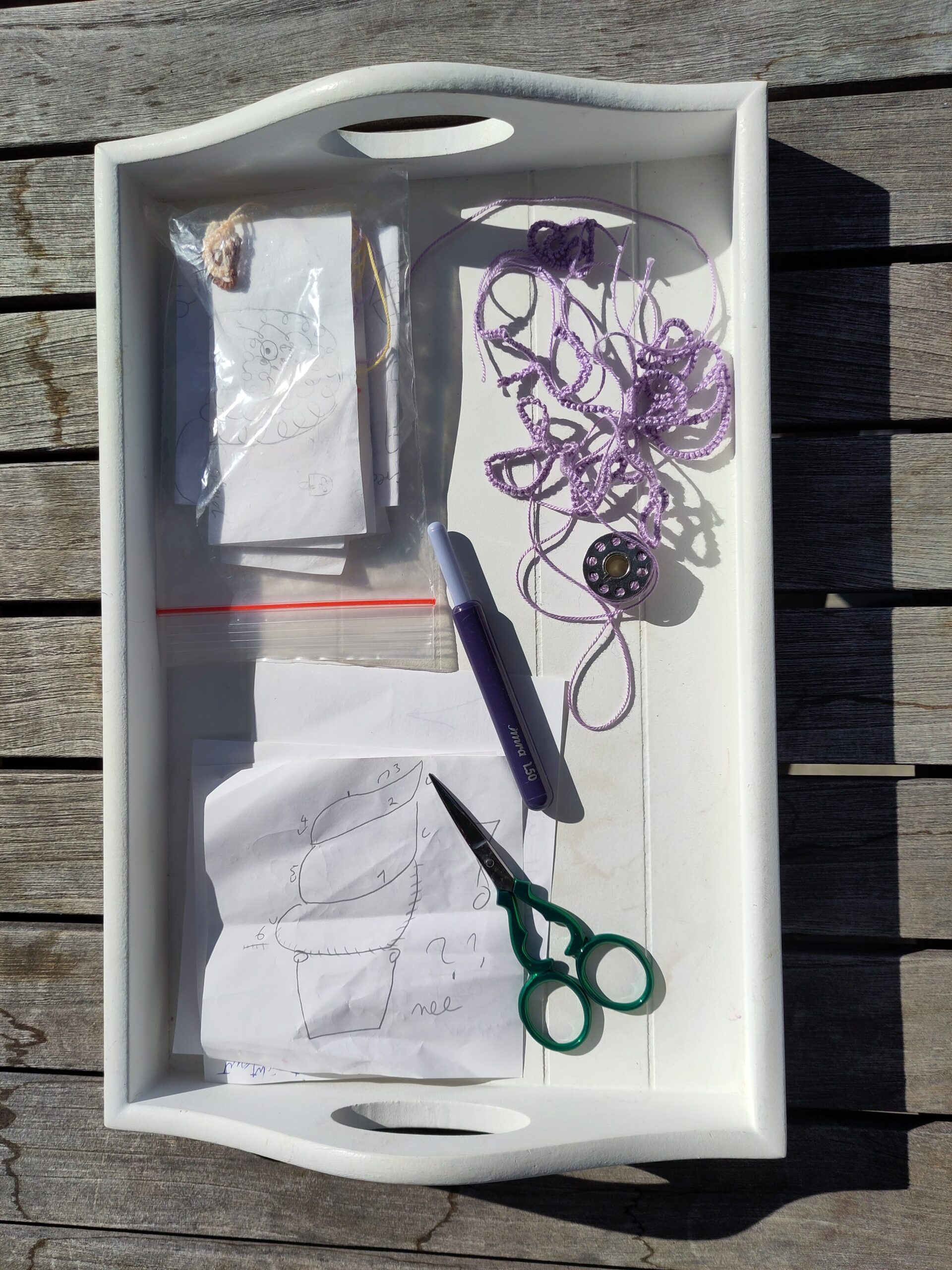
Of course, the tray isn’t always as tidy as it is in the cover photo. But even when there’s a bit of chaos on it, it still brings order into my life. The decisions about the project and the materials have already been made. As soon as I have a bit of time, I can jump right in. Today, for example, my tray looks like this:
Do you use a project tray too, or do you have a different system? Feel free to leave me a comment.